Bukele Proposes Release of Up to Half of 90,000 Gang‑Era Detainees, Raising Global Scrutiny
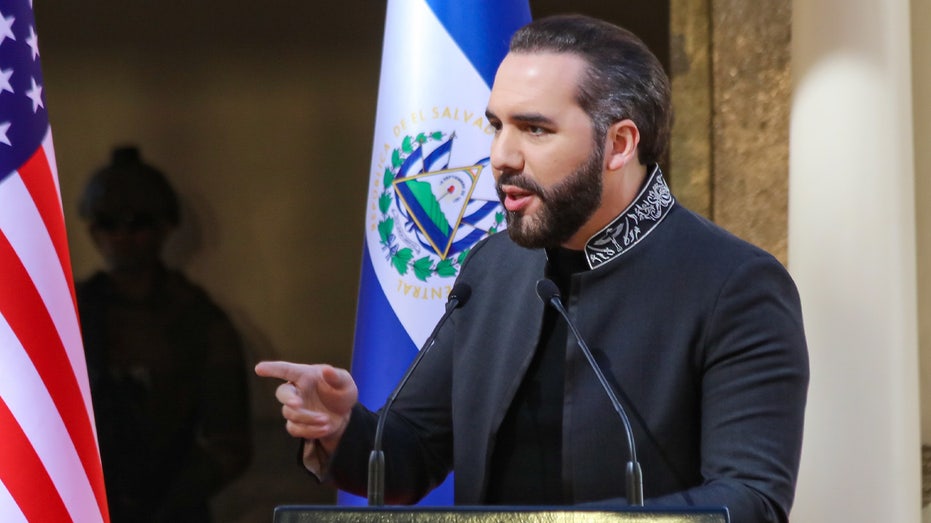
President **Nayib Bukele** stunned the international community on Tuesday by announcing a conditional amnesty that could free up to half of the **90,000 detainees** arrested under the country’s long‑standing **state of emergency** aimed at dismantling powerful street gangs. The plan, presented during a televised address, promises immediate release for non‑violent offenders while retaining custody of those deemed high‑risk, a pivot that could reshape El Salvador’s security landscape and reverberate across diplomatic corridors.
The crackdown, launched in March 2022, drove homicide rates to historic lows but also triggered a cascade of **humanitarian crisis** warnings from the **United Nations** and human‑rights NGOs. Critics argue that mass incarcerations without due process have strained the penal system, inflating prison occupancy to over 120% of capacity and prompting the **International Committee of the Red Cross** to flag deteriorating conditions. Bukele’s latest maneuver appears driven by a blend of domestic political calculus—bolstering his re‑election narrative—and a strategic attempt to defuse mounting international pressure.
Quantitatively, the proposal translates to releasing roughly **45,000 inmates**, a figure representing 50% of the current detainee pool. Prison officials estimate that the move would reduce overcrowding by 60%, potentially cutting annual correctional expenditures by an estimated **$150 million**. However, security analysts caution that the release of even low‑level offenders could raise the homicide‑rate baseline, eroding the 17% decline recorded in 2023. Moreover, the plan hinges on a rigorous risk‑assessment algorithm that classifies 30% of the cohort as “high‑risk,” keeping them behind bars for an additional five years.
From a market perspective, the policy injects uncertainty into El Salvador’s burgeoning crypto‑friendly economy and its sovereign bond outlook. The **International Monetary Fund** has flagged governance risks, while credit rating agencies monitor the potential for renewed violence to impair tourism revenues, which account for **$1.2 billion** annually. Bilateral relations with the United States, already strained over cryptocurrency legislation, could face added scrutiny; a senior State Department official noted that “any perceived backslide on rule‑of‑law standards will complicate future aid packages.” European investors, meanwhile, are watching for **United Nations** assessments that could trigger ESG‑related divestments.
The forward horizon is defined by three interlocking variables. First, the UN Human Rights Council is slated to convene a special session on El Salvador’s emergency measures, where the **International Committee of the Red Cross** will present its findings. Second, regional actors, including Mexico and Colombia, are poised to adjust **bilateral relations** frameworks, potentially leveraging security cooperation in exchange for concessions on migration and trade. Third, the policy’s success—or failure—will feed into broader **geopolitics**, as NATO’s Mediterranean partners observe how a small nation balances authoritarian tactics with democratic norms. As one UN Special Rapporteur warned, "Mass releases without transparent vetting risk reigniting the very violence that justified the emergency in the first place."
Investors and policymakers must monitor three key signals: the rollout timeline of the risk‑assessment algorithm, any formal response from the **United Nations** Security Council, and shifts in U.S. Treasury assistance tied to human‑rights benchmarks. The interplay of domestic security objectives with international diplomatic pressure will determine whether Bukele’s gamble stabilizes El Salvador’s crime landscape or provokes a resurgence that could reverberate across the **world** stage.
© Kavam News 2026. All rights reserved.