CoreWeave AI Bonds Plunge to 81 Cents, Sparking Wider Market Alarm
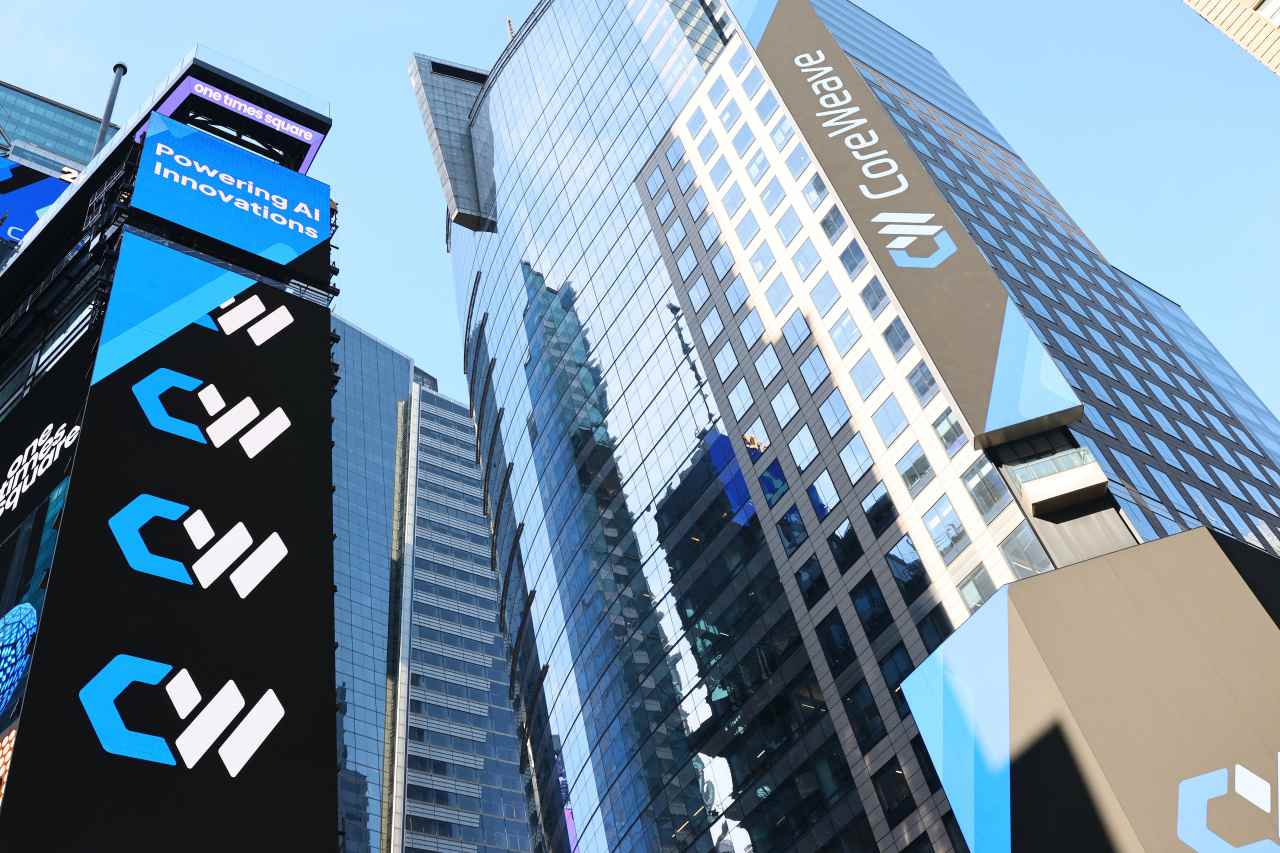
CoreWeave, the cloud‑compute specialist that has positioned itself as a key infrastructure provider for generative‑AI workloads, saw its senior unsecured notes trade at **81 cents** on the dollar on Wednesday, translating to a **15% yield**. The rapid decline, occurring just months after the $500 million issuance, sent a jolt through **Wall Street**, prompting risk‑off sentiment among investors who have been betting heavily on AI‑driven growth.
The bond slide reflects a confluence of macro forces. First, the Federal Reserve’s aggressive rate hikes have lifted benchmark yields, eroding the relative attractiveness of high‑yield corporate debt. Second, the AI sector’s capital‑intensive expansion has forced many firms to tap the bond market for funding, often at steep spreads. As the **volatility index** (VIX) hovered near historic highs, market participants grew wary of companies whose **market capitalization** is buoyed more by hype than by sustainable cash flows.
Quantitatively, CoreWeave’s bond price drop from its initial 100‑cent issuance to **81 cents** represents a **19%** price decline, while the implied yield surged from roughly 7% at issuance to over **15%**. The company’s latest earnings per share (EPS) guidance remains undisclosed, but analysts estimate a **price‑to‑earnings ratio** north of 200, underscoring the speculative premium baked into AI‑related equities. The broader AI bond market has seen a median spread widening of 250 basis points over the past quarter, a trend mirrored in the **Nasdaq**‑100’s recent pullback of 4% and a 2.3% dip in the **S&P 500**.
Market repercussions are already materializing. Hedge funds with exposure to AI credit have trimmed positions, while equity investors are recalibrating risk models that previously assumed a low‑default environment. “The CoreWeave bond slide is a bellwether for the sector,” said **Laura Chen**, senior credit analyst at JPMorgan. “When a high‑growth, cash‑rich player like CoreWeave can’t sustain its financing terms, it forces a reassessment of credit assumptions across the AI landscape.”
Regulators are watching closely, though no formal actions have been announced. The **Securities and Exchange Commission** has hinted at tighter disclosure requirements for AI‑focused issuers, aiming to curb opaque financing structures that could amplify systemic risk. Meanwhile, the **Dow Jones** industrial average has remained relatively insulated, but its constituents with AI exposure are experiencing heightened price swings, contributing to a modest uptick in the **volatility index**.
Looking ahead, investors should track three pivotal developments. First, CoreWeave’s upcoming debt covenant compliance report, due in the next 30 days, will reveal whether the firm can avoid a technical default. Second, the trajectory of Federal Reserve policy will dictate the cost of capital for all AI borrowers; any pause or reversal could stabilize yields. Third, the emergence of alternative financing—such as private‑placement mezzanine debt—may provide a back‑stop for AI firms, but at the cost of even higher risk premiums.
Strategically, portfolio managers might consider diversifying away from pure‑play AI bonds toward hybrid instruments that blend equity upside with senior debt protection. “A balanced approach that blends exposure to AI equity growth with a hedge in more credit‑solid sectors can mitigate the downside,” noted **David Alvarez**, chief investment officer at Horizon Capital. As the AI financing narrative evolves, the CoreWeave episode serves as a cautionary tale: high‑growth potential does not immunize a company from the fundamentals of credit risk, especially in a tightening monetary environment.
In sum, the CoreWeave bond tumble is more than an isolated pricing anomaly; it signals a broader market recalibration where **Wall Street** must reconcile AI enthusiasm with disciplined risk assessment. The next quarter will reveal whether this correction is a temporary blip or the opening act of a more sustained credit tightening across the AI sector.
© Kavam News 2026. All rights reserved.