South Korea Empowers Courts to Seize Bitcoin for Debt Recovery Under New Rules
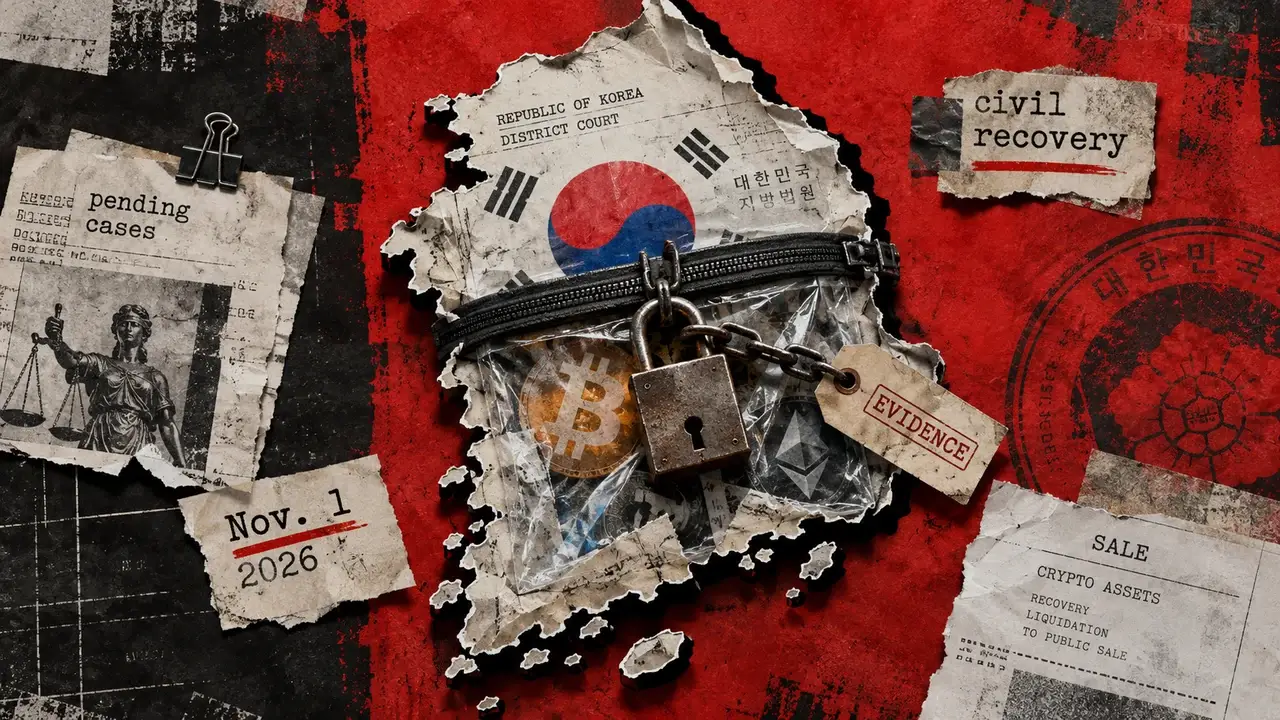
South Korea’s financial watchdog announced a landmark amendment that will allow courts to **seize and sell Bitcoin** to satisfy unpaid debts, effective November 2024. The change, codified on October 12, replaces a fragmented patchwork of enforcement mechanisms with a single, court‑driven process that applies to both exchange‑held claims and crypto assets stored in private wallets.
The policy emerges amid a broader push by the **Financial Services Commission** to bring cryptocurrency activities under the same regulatory umbrella as traditional finance. By treating digital tokens as comparable to securities or commodities, the government aims to close loopholes that have previously enabled debtors to hide assets on the blockchain. The amendment also delineates separate procedures for exchange‑based claims—where the platform acts as a custodian—and directly held crypto, ensuring that courts can issue seizure orders even when the debtor controls the private keys.
At the macro level, the move reflects Korea’s dual ambition: to protect creditors while preserving the country’s reputation as a **crypto‑friendly** innovation hub. The nation accounts for roughly **15 %** of global crypto trading volume, and its exchanges handle billions of dollars daily. Yet the rapid expansion of the **crypto market** has exposed regulators to mounting pressure from banks and consumer groups demanding stronger safeguards against fraud and default.
Quantitatively, the amendment could affect up to **$1.5 billion** in outstanding retail debt, according to data from the Korea Consumer Finance Association. By granting courts the authority to liquidate digital assets, the government expects to reduce delinquency rates by an estimated **3‑4 percentage points** over the next two years. Moreover, the rule may accelerate the velocity of Bitcoin transactions, as lenders could incentivize borrowers to pledge crypto as collateral, thereby increasing on‑chain activity.
Market participants are already adjusting strategies. Institutional lenders are revisiting credit‑risk models to incorporate **cryptocurrency** exposure, while exchange operators are bolstering compliance teams to respond swiftly to court orders. Some analysts predict a short‑term dip in Bitcoin’s price as holders reassess liquidity risk, but a longer‑term stabilizing effect as the asset class gains clearer legal status. “The ability to enforce debt through crypto assets removes a major blind spot for creditors,” said **Dr. Min‑soo Lee**, senior economist at the Korea Institute of Finance. "It also sends a signal that digital assets will be treated with the same seriousness as traditional securities."
The amendment also touches on emerging blockchain layers. While the primary focus is on **Bitcoin**, the legislation does not exclude **Ethereum** or other programmable tokens, meaning that smart contracts on **layer 2** solutions could be subject to seizure if they hold value. This raises questions about the future of **staking** rewards and **NFT** holdings that are often locked in decentralized protocols. Legal scholars warn that the lack of clear guidance on how to unwind complex DeFi positions could lead to protracted litigation.
Regulators have emphasized that due process will be preserved. Courts must obtain a writ of execution, and debtors retain the right to contest the seizure in a separate proceeding. The amendment also mandates that seized assets be sold through transparent auction platforms, with proceeds distributed to creditors under court supervision. This procedural rigor aims to mitigate concerns about arbitrary confiscation and to align Korea’s approach with international best practices.
For investors, the immediate implication is heightened due diligence. Portfolio managers should assess the custodial arrangements of any crypto exposure and consider the legal enforceability of collateral clauses. Companies that provide **crypto‑asset management** services may find new revenue streams by acting as court‑appointed custodians during the auction process.
Looking ahead, the policy could influence regional regulatory trends. Japan and Singapore, both vying for leadership in blockchain innovation, may feel pressure to articulate comparable enforcement mechanisms. Additionally, the amendment could spur legislative refinements around cross‑border asset recovery, especially as Korean debtors increasingly hold assets on foreign exchanges.
In sum, South Korea’s court‑seizure framework marks a decisive step toward integrating digital assets into the conventional financial‑legal system. By granting courts the power to liquidate **Bitcoin** and other cryptocurrencies, the government seeks to protect creditors, reinforce market integrity, and set a benchmark for global regulators navigating the complex intersection of law and blockchain technology.
Stakeholders should monitor three developments closely: the first wave of court‑ordered auctions, the evolution of compliance protocols at major exchanges, and any judicial rulings that clarify the treatment of **staking** rewards and **NFT** collections under the new regime. These factors will shape the risk‑reward calculus for anyone with exposure to the Korean crypto ecosystem.
© Kavam News 2026. All rights reserved.