Sberbank Gets Green Light to Offer Crypto Trading, Marking Russia’s First Major Bank Entry into Digital Assets
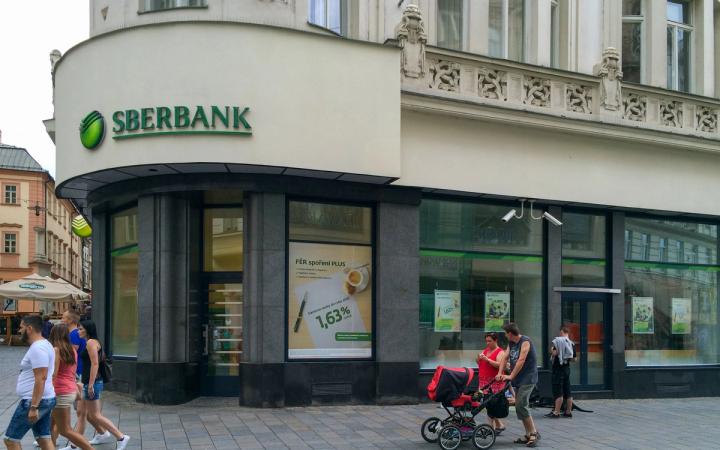
Sberbank, Russia’s pre‑eminent banking institution, announced it has secured formal permission from the Central Bank of Russia to offer cryptocurrency trading to its entire client base starting **December 1**. The approval follows a pilot phase in which the bank’s mobile app allowed limited **bitcoin (BTC)**, **ethereum (ETH)** and **USDT** transactions, positioning Sberbank as the first major traditional lender to bridge the gap between fiat banking and the **crypto market**.
The regulatory green light reflects a broader shift in Russia’s financial architecture. After years of ambiguous policy—oscillating between outright bans and tentative acceptance—authorities are now crafting a framework that tolerates crypto activity under strict anti‑money‑laundering (AML) supervision. Analysts argue that the move is driven by a desire to retain capital within the country’s financial system, counteract capital flight, and harness the efficiency of **blockchain** for cross‑border payments. By integrating crypto services, Sberbank can offer a controlled gateway that satisfies both state oversight and growing client demand for digital assets.
Quantitatively, the impact could be significant. Russia’s retail crypto holdings are estimated at **$5 billion**, with a majority concentrated in BTC and ETH. Sberbank’s client base exceeds **100 million** accounts, meaning even a modest adoption rate could double current trading volumes. Early testing showed that transaction speeds on the bank’s proprietary platform matched industry benchmarks, and the institution plans to support **staking** of select tokens, potentially adding an estimated **2‑3 %** yield for participants. Moreover, the bank is exploring **layer 2** solutions to reduce gas fees on Ethereum, a move that could make high‑frequency trading more viable for Russian users.
The market repercussions are immediate. Domestic crypto exchanges may see a migration of liquidity toward Sberbank’s more secure, regulated environment, while traditional brokers could feel pressure to expand their digital offerings. International investors will watch how the bank navigates **smart contracts** and **NFT** custody, areas where regulatory clarity remains thin. Risk‑averse institutions may view Sberbank’s entry as a validation of crypto’s durability, prompting a wave of similar applications across Eastern Europe. Conversely, heightened exposure amplifies cyber‑risk vectors; the bank must fortify its infrastructure against hacking attempts that have plagued other financial‑crypto hybrids.
Looking ahead, several strategic developments will shape the trajectory of this initiative. First, the bank’s ability to integrate **staking** services and **layer 2** scalability will determine its competitive edge against pure‑play crypto platforms. Second, the Central Bank’s forthcoming rules on stablecoin reserves and AML reporting will either constrain or empower Sberbank’s product suite. Finally, geopolitical factors—such as sanctions and cross‑border payment restrictions—could either accelerate the domestic adoption of crypto as a hedge or stifle growth through external pressure. Stakeholders are advised to monitor the bank’s rollout timeline, regulatory updates, and the performance of its crypto‑related balance sheet items as early indicators of success.
"Sberbank’s entry into crypto is a litmus test for how legacy finance can coexist with decentralized finance under a stringent regulatory regime," said Elena Morozova, senior analyst at Moscow‑based fintech consultancy FinTech Insight. "If the bank can deliver a seamless, secure experience while complying with AML standards, it will set a precedent for the entire region."
"For global investors, the significance lies not just in the volume of Russian crypto trading but in the operational blueprint Sberbank creates for integrating blockchain services into a traditional banking model," noted James Patel, crypto‑market strategist at Global Digital Assets. "The success or failure of this experiment will reverberate across emerging markets where banks are wrestling with similar policy dilemmas.
© Kavam News 2026. All rights reserved.