IMF Flags After-Hours Surge in Tokenized US Stock Trading, Raising Volatility Concerns
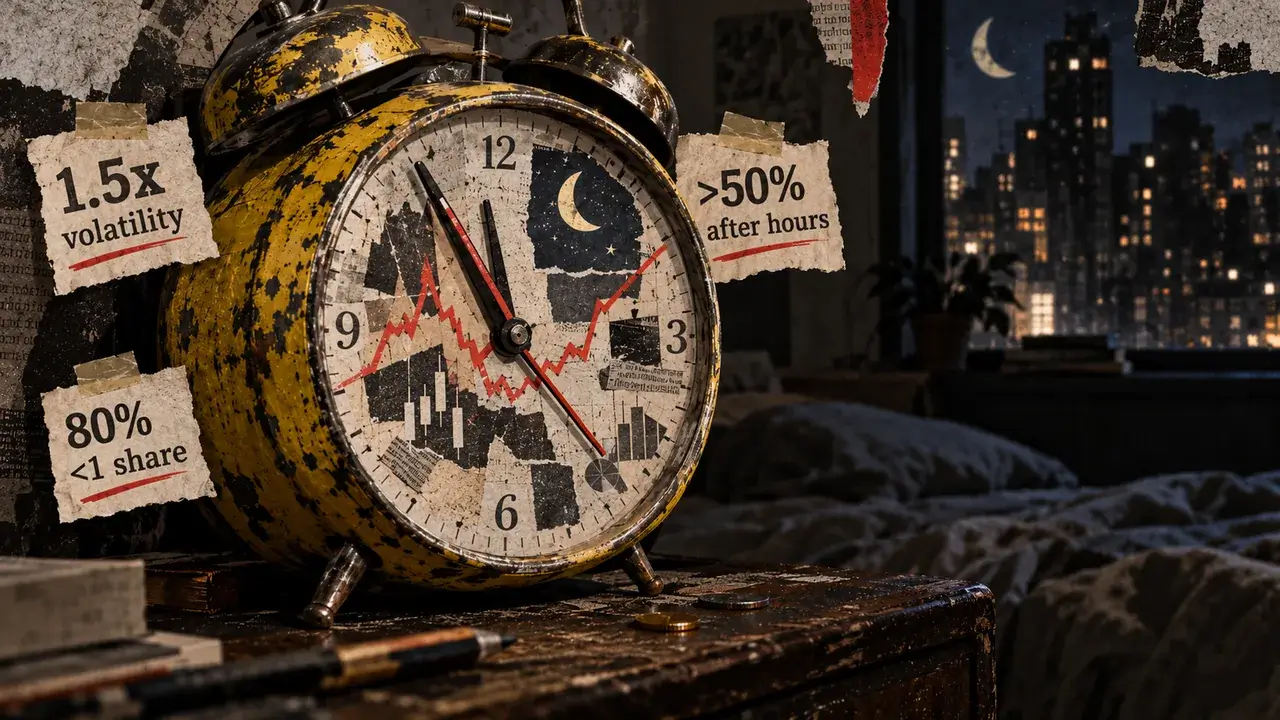
The **International Monetary Fund** (IMF) has uncovered a striking pattern in the nascent market for tokenized U.S. equities: more than half of the trading volume in a five‑product sample takes place after the New York Stock Exchange shuts its doors. This after‑hours dominance, coupled with volatility roughly **1.5 times** that of traditional counterparts, forces market participants to reassess the systemic implications of marrying blockchain‑based securities with legacy finance.
At the macro level, the surge reflects two converging forces. First, the broader tokenization wave—driven by blockchain’s promise of fractional ownership and instantaneous settlement—has lowered the friction barrier for retail and institutional investors seeking exposure to blue‑chip stocks outside regular hours. Second, the **crypto market** itself has matured, with assets like **bitcoin** and **ethereum** now serving as collateral in decentralized finance (DeFi) protocols, creating a feedback loop that fuels demand for tokenized equities as a hedge against crypto price swings. As a result, platforms that blend **smart contracts**, **staking**, and **layer 2** scaling are positioning themselves as the de‑facto after‑hours venues.
Quantitatively, the IMF’s sample shows that **over 50%** of tokenized equity trades occur in the post‑close window, a stark contrast to the sub‑10% after‑hours activity seen in conventional markets. Moreover, price swings in this segment averaged **1.5 times** the volatility of their physical‑share equivalents, suggesting that liquidity is still thin and order books are more susceptible to large‑ticket moves. The report also notes that tokenized volumes, while still modest in absolute dollars, have risen at a compound annual growth rate exceeding **30%**, outpacing the broader **cryptocurrency** sector’s expansion.
The market repercussions are already materializing. Brokerage‑style crypto exchanges such as **Coinbase** and **Binance** have rolled out dedicated after‑hours tokenized equity desks, touting the ability to trade **NFT**‑backed share certificates 24/7. This opens a new revenue stream for firms that can integrate **staking** incentives—allowing users to earn yields on idle token holdings—while also attracting **layer 2** developers eager to reduce transaction costs during peak periods. Conversely, regulators, notably the **Securities and Exchange Commission** (SEC), are sounding alarms about investor protection and market integrity. An SEC spokesperson warned, "The after‑hours tokenized market amplifies price discovery challenges and could expose retail participants to heightened risk without robust oversight."
Looking ahead, several catalysts will shape the trajectory of after‑hours tokenized trading. First, the IMF’s findings are likely to spur tighter reporting requirements, pushing platforms toward greater transparency and real‑time surveillance. Second, technological upgrades—particularly the deployment of **layer 2** rollups on **Ethereum**—could alleviate congestion, lower gas fees, and make post‑close settlement more efficient, thereby narrowing the volatility gap. Finally, the integration of **staking** mechanisms and **NFT**‑based ownership proofs may create new asset classes that blur the line between traditional equities and digital collectibles, compelling institutional investors to recalibrate risk models. As the ecosystem evolves, market participants must monitor regulatory pronouncements, scalability solutions, and cross‑asset liquidity flows to navigate the emerging after‑hours frontier.
"The data underscores a fundamental shift: tokenized securities are no longer a niche experiment but a growing slice of the market that operates on its own clock," observes Dr. Maya Patel, senior analyst at **CryptoSlate**. Her assessment captures the strategic imperative for both crypto innovators and legacy financial institutions to adapt to a world where **bitcoin**, **ethereum**, and other blockchain assets coexist with tokenized stocks in a continuously trading environment.
© Kavam News 2026. All rights reserved.