Ethena’s USDe Backing Over 50% Tied to Lending Raises Counterparty Risk Concerns
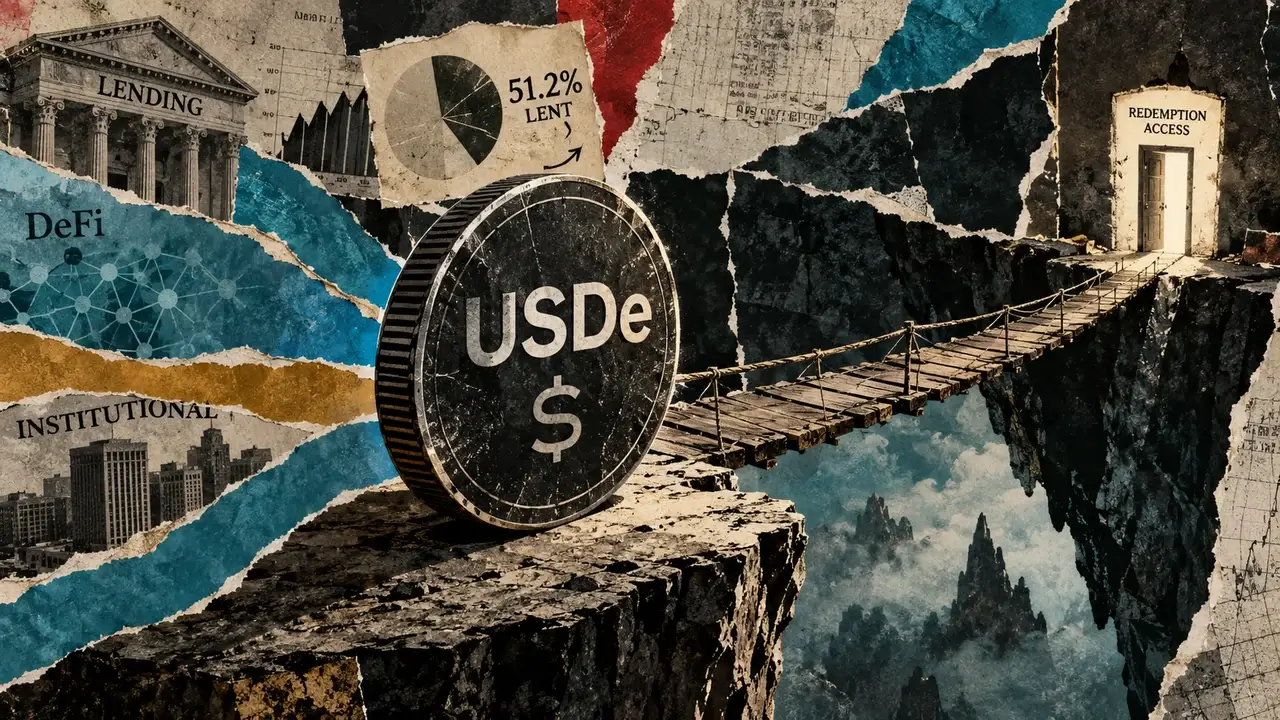
Ethena’s USDe stablecoin has drawn intense scrutiny after a **LlamaRisk** snapshot dated October 12 disclosed that more than half of its backing is locked in lending contracts. The revelation places the **$200 million**‑plus supply of USDe under a spotlight, as holders now confront the prospect that redemption could hinge on the health of external DeFi platforms rather than on transparent, liquid reserves.
The macro environment for stablecoins is shifting toward deeper integration with **DeFi lending** and **layer 2** solutions, a trend that promises higher yields but also introduces layered counterparty exposure. Traditional fiat‑backed stablecoins have historically relied on cash and government securities; however, the burgeoning **crypto market** sees assets like USDe leveraging the **Ethereum** blockchain to generate returns through protocols that lend, borrow, and earn interest on deposited capital. This strategic pivot reflects a broader industry push to make stablecoins more capital‑efficient, yet it also raises systemic questions about the resilience of such models during market stress.
According to the LlamaRisk data, **$110 million**—approximately **55%** of USDe’s total collateral—resides in active lending positions across platforms such as **Aave**, **Compound**, and **Yearn**. The remaining assets are split between cash equivalents, short‑term Treasuries, and a modest allocation to **smart‑contract‑based** yield farms. The concentration metric is stark: for every **$1** of USDe in circulation, **$0.55** is effectively outsourced to third‑party protocols that operate under variable interest rates and liquidation thresholds. This structure diverges sharply from the more conservative backing models of rivals like **USDC** and **USDT**, which maintain a higher proportion of liquid, low‑risk assets.
Market repercussions are already materializing. Institutional investors with exposure to USDe are reassessing risk‑adjusted returns, especially as **bitcoin** and **ethereum** price volatility persists. The heightened reliance on DeFi lending could attract arbitrageurs seeking yield, but it also exposes USDe holders to liquidity crunches if a major protocol experiences a run or a smart‑contract exploit. Regulators, notably the **U.S. Securities and Exchange Commission**, have signaled growing interest in the collateral composition of algorithmic and fiat‑backed stablecoins, suggesting that future guidance may demand greater transparency and diversification.
"The concentration of USDe in lending platforms creates a **counterparty risk** profile that is atypical for a stablecoin of its size," said **Maya Patel**, senior analyst at **CryptoRisk Advisory**. "Investors must weigh the upside of higher yields against the potential for rapid de‑pegging if a lending protocol faces a solvency shock."
Beyond the immediate risk calculus, the situation underscores the evolving role of **staking**, **smart contracts**, and **NFT**‑backed collateral in stablecoin ecosystems. Ethena’s architecture allows USDe to be minted against staked **ETH** on **layer 2** rollups, a design intended to boost capital efficiency. However, the reliance on external lending dilutes the protective buffer that staking provides, effectively intertwining USDe’s stability with the health of the broader **blockchain** lending infrastructure. This interdependence could accelerate the integration of **NFT** collateralization as a diversification tool, though such moves would introduce additional valuation complexities.
Looking ahead, several catalysts will shape USDe’s trajectory. First, Ethena is expected to publish a detailed audit of its lending exposure within the next quarter, a step that could either reassure the market or expose further vulnerabilities. Second, emerging regulatory frameworks may impose stricter collateralization ratios, compelling Ethena to rebalance its portfolio toward more liquid assets. Finally, the broader **crypto** community will watch how other stablecoins adjust their backing strategies in response, potentially sparking a wave of diversification across the sector. Investors should monitor these developments closely, as the balance between yield generation and redemption safety will define the next phase of stablecoin evolution.
© Kavam News 2026. All rights reserved.